Types of Door Locks: All 8 Door Lock Types Explained
Not all door locks are the same: what to look out for when choosing, what types of door locks and modern solutions there are.


Door lock types differ significantly in design, security level, and application area. Whether for interior doors, front doors, or commercial properties: choosing the right type of door lock is crucial for security, convenience, and the smooth operation of a building. This guide provides a complete overview of the 8 most common door lock types, explains their functionality and areas of application, and shows when a digital locking system is the superior choice for businesses.
The Evolution of Door Lock Types: From Traditional to Modern
Mechanical locks used to dominate the market. Especially in older buildings, you will often find traditional door lock types such as the classic lever tumbler lock. These simple locks were easy to use, but offered only a low level of security. As the need for protection and convenience grew, locks continued to evolve. Today, there is a wide range of modern variants that combine both mechanical and electronic components.
What Types of Door Locks Are There? 8 Types at a Glance
Door lock types differ primarily in their security level and area of application. The 8 most important door lock types are: mortise lock, lever tumbler lock, profile cylinder lock, security lock, WC lock, box lock, deadbolt, and hook bolt lock. Modern digital door locks are increasingly replacing traditional door lock types and give businesses a maximum level of flexibility and control.
Depending on the area of application and security requirements, door locks differ significantly. Here is an overview of the different door lock types:
Mortise Lock: The Most Common Door Lock Type
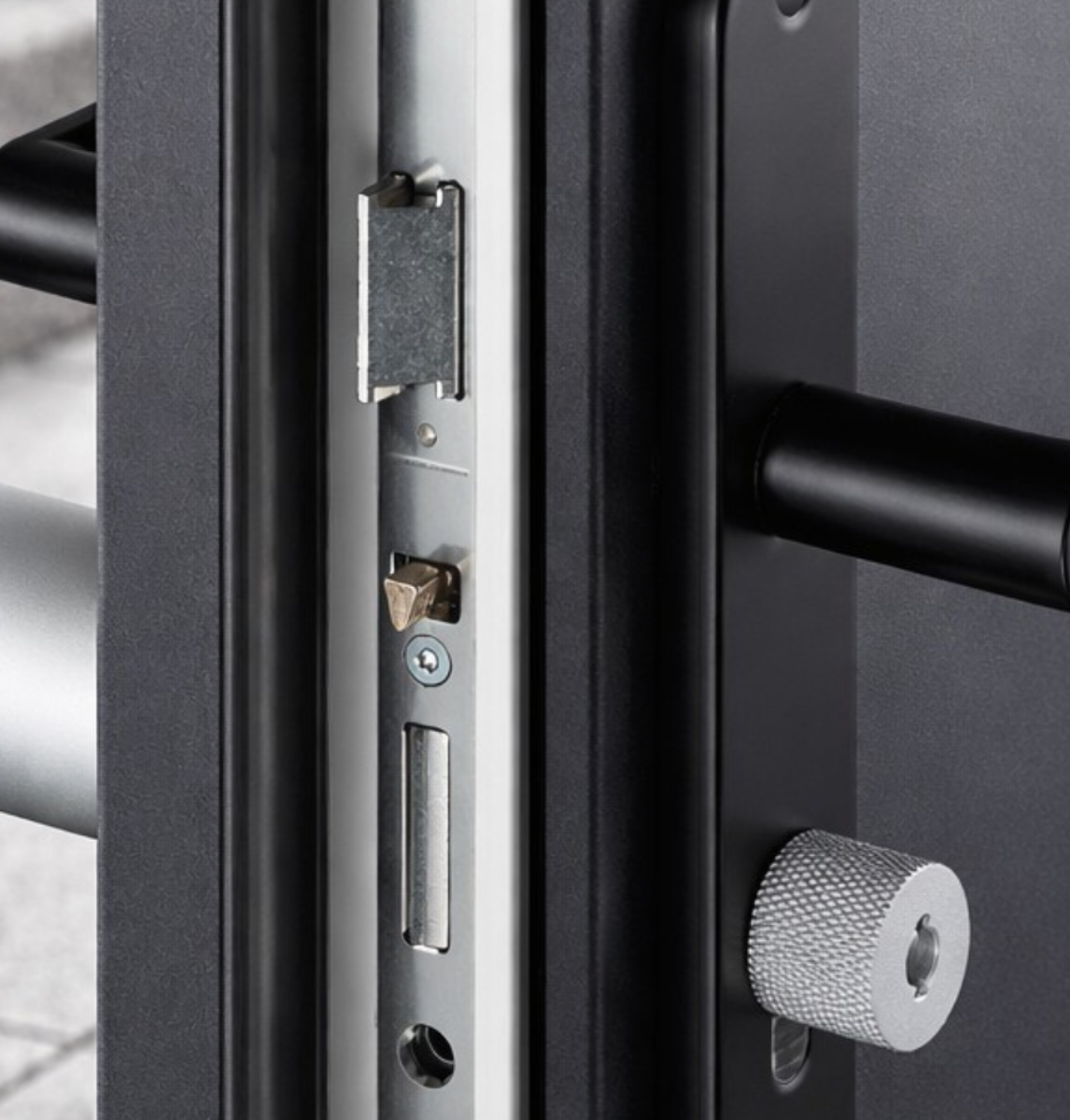
The mortise lock is by far the most common door lock type in German buildings. It is installed directly into the door leaf and is therefore not visible from the outside. The lock case consists of a latch bolt, deadbolt, and follower. A separately inserted lock cylinder drives the mechanism. The key dimensions are the backset (standard: 65 mm) and the centre distance (72 mm or 92 mm). Mortise locks are available in various types: as a profile cylinder lock, lever tumbler lock, or WC lock. When replacing a mortise lock, it is recommended to carefully measure the existing lock cylinder and the backset.
Lever Tumbler Lock: The Classic Interior Door Lock
The lever tumbler lock is one of the oldest and simplest lock types. It is mainly used for interior doors, for example in living spaces or offices. Due to its simple mechanism, it offers only limited protection and is not suitable for use on exterior doors. The lever tumbler lock is characterised by its traditional key type and is particularly easy to use. As a traditional door lock type, it is frequently found in older existing buildings.
Profile Cylinder Lock: Standard for Front and Apartment Doors
Profile cylinder locks are today the most commonly used locks for front doors and apartment doors. They offer a balanced combination of security and ease of use. The key fits precisely into the cylinder and activates the locking mechanism by turning. A major advantage is the interchangeability of the cylinder, which enables flexible retrofitting and simple key management. High-quality variants also feature anti-pull and anti-drill protection as additional security features. For commercial properties, the profile cylinder lock is the basis of an electronic locking system for companies.
Security Lock: High Protection for Exterior Areas
Security locks are specifically designed for increased security requirements. They feature multiple locking points that make the door particularly resistant to break-ins. In addition, they are equipped with anti-drill protection and special anti-manipulation devices. This lock type is preferably used on entrance doors of residential buildings or in commercial properties to provide maximum protection. Many security locks meet the requirements of resistance class RC2 or RC3 in accordance with DIN EN 1627.
WC Lock and Bathroom Lock: Specialist Solution for Sanitary Areas
The WC lock is a special form of the mortise lock, specifically developed for bathrooms and toilet areas. On the inside it features a thumbturn for locking, while on the outside only a status indicator (red/white or occupied/vacant) is visible. In emergencies, the WC lock can be opened from the outside with a simple tool, such as a coin. This door lock type has no cylinder function and therefore provides no burglary resistance. It is exclusively recommended for sanitary areas.
Box Lock: Historical and Visible Lock Variant
The box lock is a traditional lock type that is frequently used on historical or listed doors. It is mounted visibly on the door and can be easily retrofitted if required. Due to its design, it is visually prominent and provides solid mechanical locking, which is particularly valued in older buildings. Unlike the mortise lock, the box lock does not require a recess in the door leaf.
Deadbolt: Additional Security Through Extra Locking
Deadbolts serve as additional security alongside the main lock. They are usually fitted on the inside of the door and can be operated independently of the main lock. Deadbolts are particularly popular on side entrances, cellar doors, or garage doors, where they provide simple and effective additional security. With regard to fire protection requirements, it should be noted that deadbolts cannot replace a panic lock.
Hook Bolt Lock: The Door Lock Type for Sliding Doors
The hook bolt lock is the appropriate door lock type for sliding doors. Since a straight bolt cannot lock a sliding door by design, the hook bolt lock features a curved or hook-shaped bolt. This hooks behind the strike plate or a pin when locking and prevents the door from sliding open. It is available in three variants: as a lever tumbler hook bolt lock for simple interior sliding doors, as a profile cylinder hook bolt lock for increased security, and as a WC hook bolt lock for sanitary areas.
Digital Door Locks: The Future of Access Control
Alongside classic door lock types, digital systems are becoming increasingly important. In particular, solutions such as those from BlueID represent a new generation of access control.
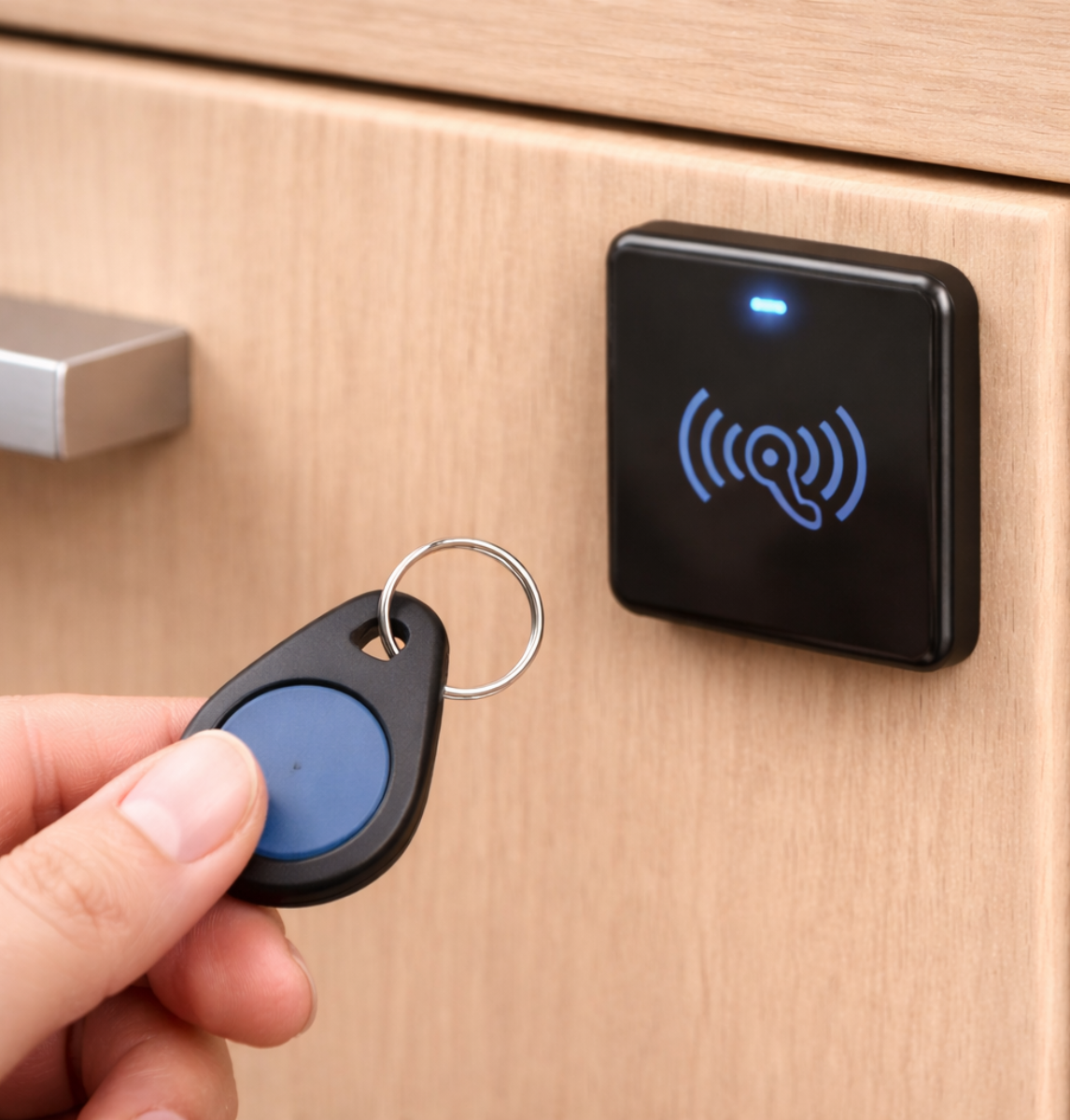
Digital door locks allow doors to be opened without a mechanical key. Instead, access is granted via an app, PIN code, chip card, or biometric procedures. The advantages are clear: users can flexibly grant or revoke access authorisations, have a precise overview of who opened a door and when, and can manage their property significantly more securely.
BlueID offers highly secure, cloud-based locking systems developed for both private homes and businesses. The systems are easy to install and offer the highest standards in terms of data protection and security. Whether in apartment buildings, office complexes, or public facilities: with a digital locking system from BlueID, traditional key management is finally superseded.
Door Lock Dimensions: Getting Backset and Spacing Right
Before purchasing a new door lock or replacing an existing lock cylinder, you need to determine the correct measurements. The two decisive dimensions are:
- Backset: Distance from the faceplate to the centre of the lock cylinder hole (standard: 65 mm)
- Centre distance: Distance between the bores for the door handle and lock cylinder (72 mm or 92 mm, German standard)
Both measurements must correspond exactly to the existing fitting and door leaf to ensure correct installation. For commercial buildings with many doors, centralised documentation of all lock dimensions is recommended as part of structured digital key management.
Door Lock Types by Resistance Class: RC1 to RC6
The burglary resistance of a door lock is categorised into resistance classes (RC) in accordance with DIN EN 1627. The higher the class, the longer the door withstands a break-in attempt:
- RC1: Protection against physical force (kicking, shoulder barging, foot blows)
- RC2: Protection against simple break-in tools (screwdriver, pliers, wedge) – minimum standard for offices and residential buildings
- RC3: Protection against experienced attackers with lever tools
- RC4: Protection against experienced burglars with power drills and angle grinders
- RC5 and RC6: Protection for objects with particularly high security requirements
RC2 is recommended as the minimum standard for private homes and office buildings. Security locks with RC3 offer significantly better protection against burglary in commercial properties. Digital locking systems such as those from BlueID additionally offer a complete audit trail function, which is indispensable for businesses with increased security requirements.
Door Lock Types Compared
Which Door Lock Type Is the Right Choice?
The choice of the appropriate door lock depends strongly on individual requirements. For simple interior doors, inexpensive lever tumbler locks are sufficient, while exterior doors require a higher level of protection. High-quality security locks or modern digital systems are recommended here.
Those who value convenience, flexibility, and the highest level of control should consider installing a digital door lock. Systems such as those from BlueID offer not only security but also a significant simplification of everyday operations, whether in private homes, businesses, or large residential complexes. In particular, for facility managers overseeing multiple properties, the central locking system for companies with digital key management is the superior solution.
Conclusion: Modern Door Lock Types Offer More Than Just Security
The world of door locks has changed: from simple mechanical systems and traditional door lock types through to highly modern digital locking systems. Anyone wondering which door lock types exist will find that the right choice depends heavily on the requirements for security, convenience, and flexibility.
With innovative providers such as BlueID, businesses can today rely on digital solutions that permanently eliminate the problems of lost keys and complex key management. The construction of a door lock forms the basis for understanding which door lock type is the right one.
Frequently Asked Questions About Door Lock Types
What types of door locks are there?
There are numerous door lock types, including mortise locks (as PZ or BB variants), lever tumbler locks for simple interior doors, profile cylinder locks for front and apartment doors, security locks with multi-point locking, WC and bathroom locks for sanitary areas, box locks for older doors, deadbolts as additional security, hook bolt locks for sliding doors, and modern digital door locks such as those from BlueID.
What are traditional door lock types?
Traditional door lock types primarily refer to mechanical locks such as lever tumbler locks or box locks that were commonly used in interior rooms and front doors in the past. However, compared to modern locking systems, they offer significantly lower security and no option for digital access management.
Which door lock type is the safest?
The safest door lock type is the security lock with multi-point locking (RC3 or higher) or a modern digital door lock with encrypted access control. In particular, digital locking systems such as those from BlueID offer not only the highest security but also flexibility in managing access authorisations and complete, traceable logging of all access events.
What is a digital door lock?
A digital door lock is an electronic locking system that opens doors without a traditional key. Access is granted via an app, PIN code, chip card, or biometric data. Digital door locks such as the solutions from BlueID enable flexible and secure access control for private households and businesses, and can be managed centrally via a cloud platform.
What is the difference between a profile cylinder lock and a lever tumbler lock?
The profile cylinder lock (PZ lock) is a higher-quality door lock type with a separate, interchangeable cylinder and spring-loaded pins. It offers a high level of security and is the standard for front doors and apartment doors. The lever tumbler lock (BB lock), on the other hand, is a simpler interior door lock without a cylinder. It features a bit-shaped key and offers only limited burglary protection. Lever tumbler locks are exclusively recommended for interior doors.
What is a hook bolt lock?
A hook bolt lock is a special door lock type for sliding doors. Unlike a normal mortise lock, the hook bolt lock does not have a straight bolt but a curved or hook-shaped bolt that hooks behind the strike plate when locking. It is available in three versions: as a lever tumbler hook bolt lock, as a profile cylinder hook bolt lock, and as a WC hook bolt lock for sanitary areas.