Electronic Door Lock for Outdoor Use: Weatherproof Access Control for Modern Buildings
Weatherproof access control with IP66, NFC & BLE. Manage permissions centrally and retrofit doors quickly, even via smartphone.

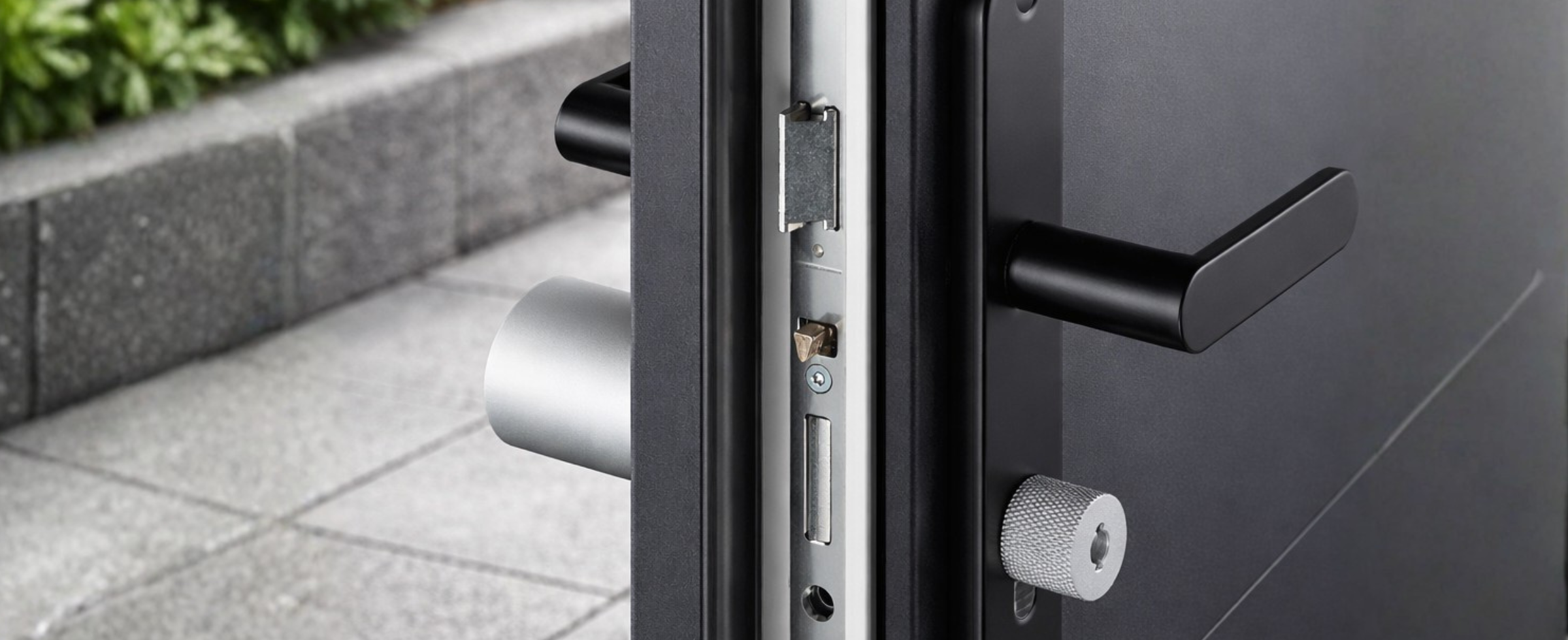
An electronic door lock for outdoor use combines modern access control with robust weather resistance, offering businesses, residential complexes, and public institutions a secure, flexible alternative to conventional locking systems. These digital locking solutions withstand extreme weather conditions, enable convenient management of access permissions, and meet the highest security standards, from front doors to garden gates, warehouses, and outdoor facilities.
Requirements for Electronic Outdoor Door Locks
The specific challenges of outdoor environments call for specially designed electronic door locks. While indoor locks operate in protected settings, outdoor locks must withstand extreme temperature fluctuations, moisture, direct sunlight, and mechanical stress.
The IP66 protection class has become the standard for high-quality electronic outdoor door locks. This certification guarantees complete protection against dust and powerful water jets from all directions. Modern systems operate reliably in a temperature range from -25°C to +65°C, ensuring year-round readiness, even under the most extreme climatic conditions.
Material selection plays a crucial role in longevity. High-grade stainless steel housings with special PVD coatings not only provide corrosion protection but also retain their aesthetic appearance for years. Electronic components are additionally potted and sealed against moisture, making a lifespan of at least ten years realistic even under continuous outdoor use.
Technologies and How They Work
Modern electronic outdoor door locks use various access methods that can be flexibly adapted to specific requirements. The dual technology of NFC and Bluetooth Low Energy has proven especially practical, as it supports both classic transponders and smartphone-based solutions.
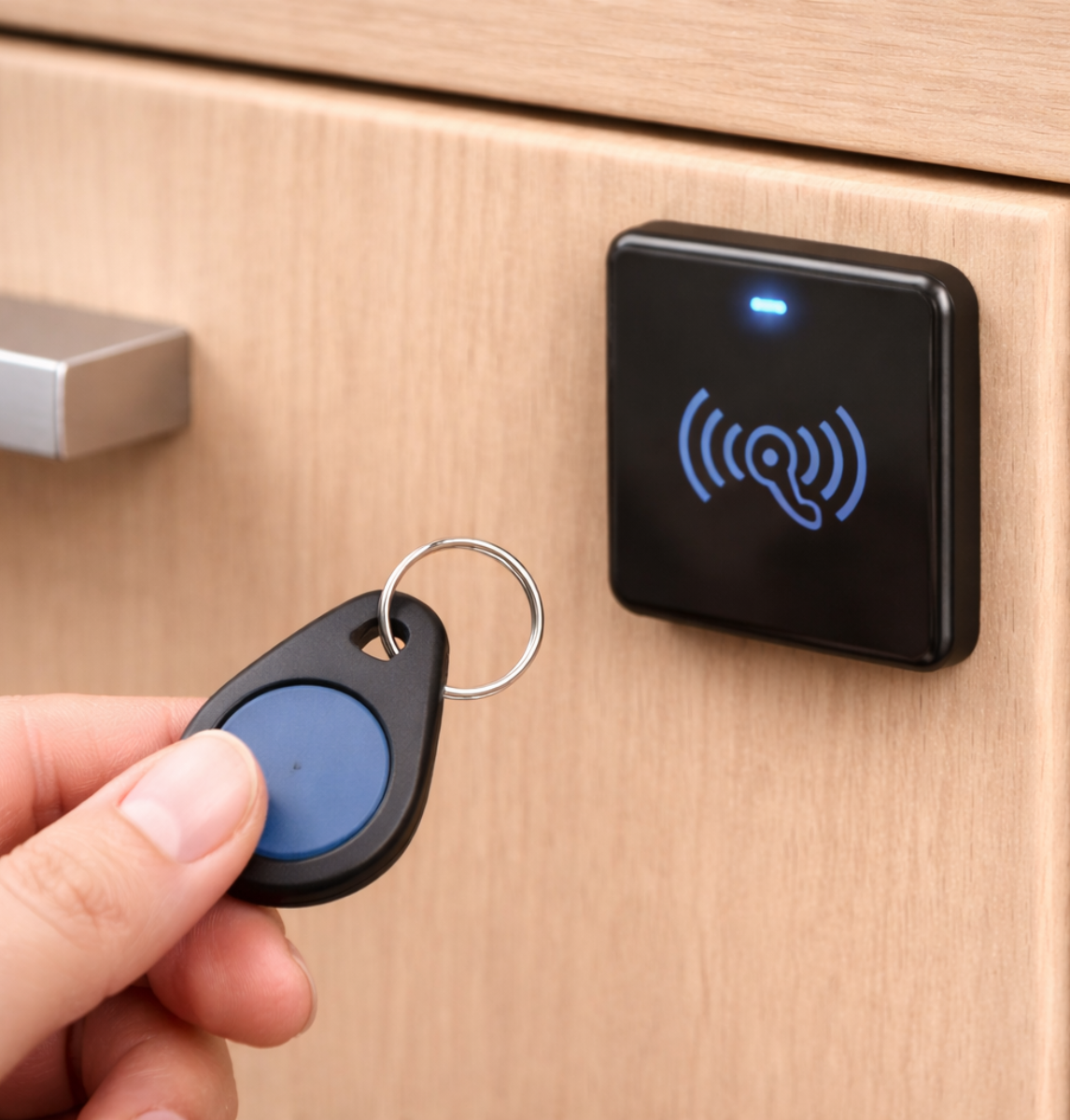
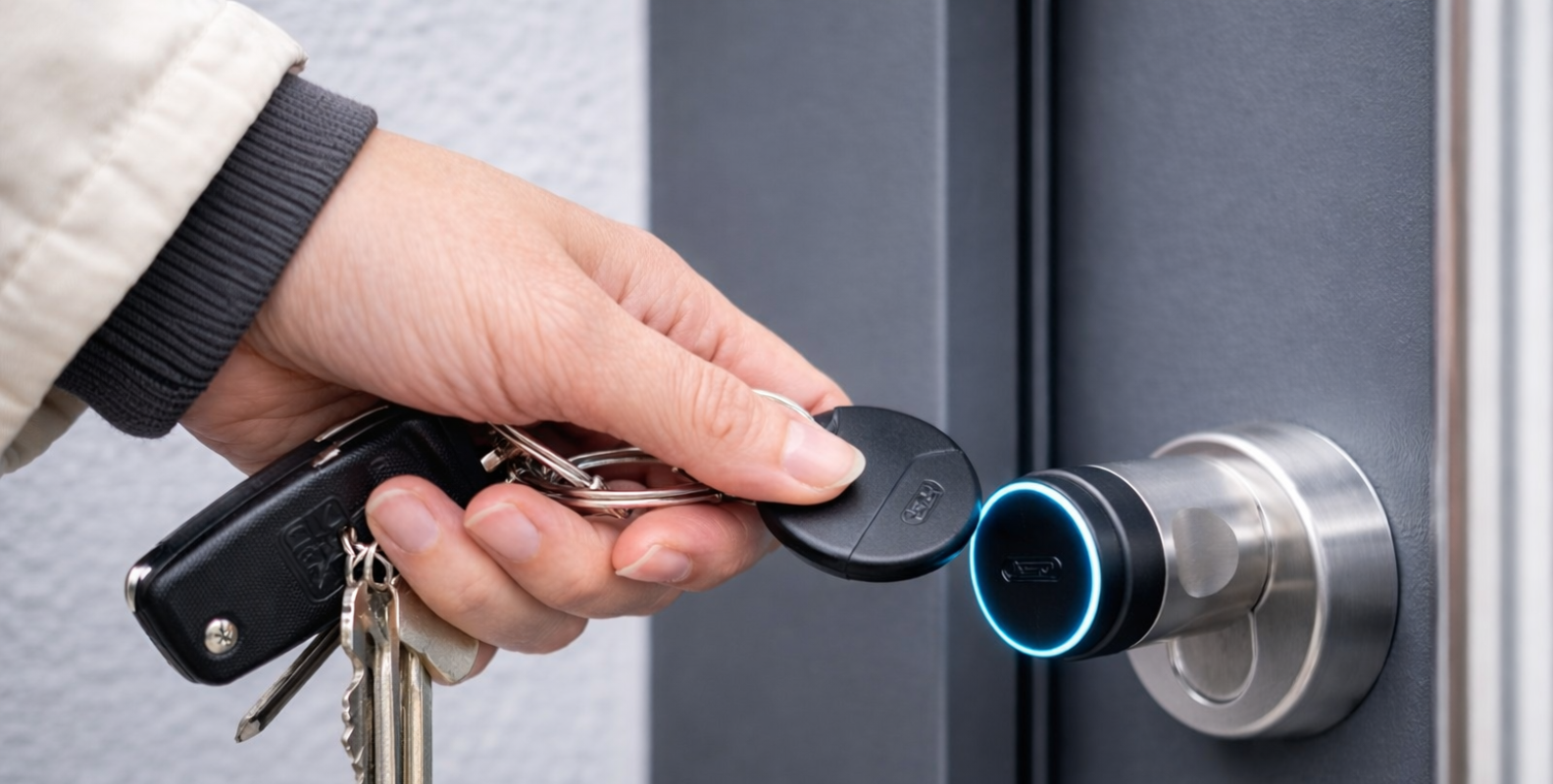
NFC technology enables the use of contactless transponders in the form of cards, key fobs, or wristbands. These work even with completely drained batteries because they draw their energy from the reader’s electromagnetic field. MIFARE DESFire transponders offer maximum security through AES-128-bit encryption and are virtually impossible to copy.
Bluetooth Low Energy unlocks additional comfort features. Authorized individuals can open doors from several meters away, ideal for situations with full hands or in rainy weather. Integration into digital wallets such as Apple Wallet or Google Wallet transforms the smartphone into a digital key that fits seamlessly into everyday digital life.
Power is supplied in most systems by standard lithium batteries, which last two to three years depending on usage intensity. Intelligent energy management with a toggle function enables permanent clutch engagement without additional power consumption. When batteries run low, early warnings are issued acoustically and via the management software.
Security Aspects and Certifications
The security of electronic outdoor door locks goes far beyond mechanical protection against forced entry. Modern systems meet the requirements of DIN EN 15684, resistance class 2, providing demonstrably high protection against tampering attempts.
The digital security architecture is based on multi-layer encryption. Every communication between the credential and the lock is individually encrypted, preventing replay attacks and man-in-the-middle attacks. Storing up to 1,024 blacklist entries directly in the lock enables the immediate blocking of lost or stolen credentials, even without an online connection.
Audit trail functionality is especially relevant for businesses. Electronic outdoor door locks log every access attempt with a timestamp and user identification. These tamper-proof logs with up to 512 entries per lock meet compliance requirements and support the investigation of security incidents.
For buildings with special security requirements, VdS-certified variants are available. These meet the strict specifications of the German insurance industry and can be easily integrated into existing intrusion alarm systems. Certification according to EN 18252 additionally confirms suitability for use in security-relevant areas.
Retrofitting an Electronic Door Lock for Outdoor Use
Retrofitting an electronic door lock for outdoor use is significantly simpler than many decision-makers assume. Modern systems are designed specifically for retrofit installations and can be mounted without complex cabling or structural modifications.
The first step is to assess the existing door situation. Most electronic outdoor door locks are compatible with standard profile cylinders and fit door thicknesses from 30 to 110 millimeters. Even special formats such as tubular frame doors, glass doors, or historic doors can be equipped with suitable adapter solutions. Modular construction enables flexible adaptation to a wide range of installation scenarios.
The installation itself requires no special tools and can be carried out by trained professionals within 15 to 30 minutes per door. For thumbturn cylinders, only the existing locking cylinder is replaced, the existing door mechanics remain unchanged. Electronic door fittings and handles replace conventional hardware, and existing holes can generally be reused.
A particular advantage when retrofitting: Existing certifications for fire and escape doors remain valid. Electronic outdoor door locks with EN 1634 certification can also be retrofitted to fire doors up to protection class T90 without jeopardizing approval. EN 179 compliance also ensures that escape routes retain their function and can be opened from the inside at any time in an emergency.
A gradual transition is easily possible. Companies can first digitize critical exterior doors and later expand the system to other areas. Management is handled via a central platform, regardless of whether ten or a thousand locks are in use.
Smart Outdoor Door Lock
Smart outdoor door locks go beyond pure access control and integrate seamlessly into modern building automation systems. These intelligent solutions communicate via Wi-Fi, LAN, or GSM with central management platforms, enabling real-time monitoring and dynamic access management.
Cloud-based administration is transforming access management. Facility managers can grant, change, or revoke access permissions from any internet-enabled device, in real time and without being physically on site. Temporary access rights for tradespeople, delivery services, or cleaning staff can be defined to the minute and automatically activated or deactivated.
Integration into existing IT infrastructures is achieved via standardized interfaces and APIs. Modern smart outdoor door locks support protocols such as MQTT or REST and can be easily integrated with systems like Microsoft Azure Active Directory or Google Workspace. Synchronization with HR systems automates employee onboarding and offboarding.
Particularly innovative are features such as geofencing and predictive access control. The system detects when authorized individuals approach the building and can unlock doors before arrival. Time-based scenarios enable automatic locking outside business hours or temporary releases for events.
Offline capability is retained despite smart features. Even in the event of internet outages or server issues, the locks continue to function autonomously. Permissions are stored locally and automatically synchronized when the connection is restored.
Areas of Application and Use Cases
Electronic outdoor door locks prove themselves in a wide range of scenarios. In office buildings, they secure main entrances, parking garage accesses, and delivery entrances. Flexible rights management allows employees to be granted time-zone-based access, while visitors receive temporary access codes.
Residential complexes benefit from the combination of security and convenience. Tenants open front doors, waste rooms, or bike storage with their personal transponder or smartphone. When tenants change, the costly replacement of locking cylinders is eliminated, the authorization is simply transferred digitally. Tradespeople and parcel services receive time-limited access codes for defined areas.
In industrial environments, weatherproof electronic locks secure warehouses, container depots, and outdoor facilities. The robust design withstands harsh conditions in production facilities or logistics centers. Integration with time and attendance systems automatically documents working hours and presence.
Hotels and vacation rentals use electronic outdoor door locks for contactless check-in. Guests receive their access authorization before arrival via email or app and can check in independently. Automatic deactivation after check-out time increases security and reduces administrative effort.
Sports clubs equip clubhouses, changing rooms, and equipment sheds with electronic outdoor locks. Members receive individually configurable access rights based on membership status or training group. Coaches can schedule additional training sessions at short notice and grant temporary access to participating athletes.
Costs and Economic Efficiency
The investment in electronic outdoor door locks pays off faster than initially expected thanks to various savings potentials. Purchase costs vary depending on features and security level between 300 and 800 euros per locking unit. One-time installation costs and, if applicable, license fees for the management software are added.
Operating costs remain manageable. Battery consumption averages two to three euros per year and per lock. Maintenance is limited to occasional cleaning and functional checks. Unlike wired systems, there are no complex electrical installations and their upkeep.
The greatest savings come from eliminating key management. The loss of a mechanical key can incur costs of several thousand euros in larger master key systems. With electronic systems, the lost authorization is simply blocked, without replacing cylinders. Digital rights management also significantly reduces administrative workload.
Insurers often reward the use of certified electronic locking systems with reduced premiums. The gapless documentation of all access events simplifies damage evidence and accelerates claims processing. Combined with the advantages in flexibility and security, the overall balance is positive, making electronic outdoor door locks a sound economic investment.
Choosing the Right System
Selecting the optimal electronic outdoor door lock requires a systematic needs analysis. Key criteria include the number of users, desired opening media, integration options with existing systems, and specific security requirements.
The choice between online and offline systems depends on the use case. Offline systems are suitable for smaller installations with stable user groups. They operate autonomously, require no cabling, and are particularly fail-safe. Online-capable systems offer extended features such as real-time management and remote administration but require corresponding network infrastructure.
When choosing products, rely on established manufacturers with proven outdoor expertise. Pay attention to relevant certifications, warranty services, and the availability of spare parts. Compatibility with common standards such as MIFARE DESFire ensures future-proofing and vendor independence.
System scalability is crucial for growing needs. Modular systems allow step-by-step expansion without replacing core components. Cloud-based management platforms scale automatically with the number of locks managed.
Conclusion and Recommendations
Electronic outdoor door locks represent the future of access control. They combine security, convenience, and cost-effectiveness in weatherproof, durable systems that can be flexibly adapted to diverse requirements. Retrofitting existing doors is straightforward and does not impair existing certifications. Smart features enable seamless integration into digital building infrastructures and open up new possibilities for efficient access management.
For companies, residential complexes, and public institutions looking to modernize their security infrastructure, now is the ideal time to switch. The technology is mature, the costs are predictable, and the benefits clearly outweigh the downsides.
Seek expert advice and create a tailored concept for your specific requirements. Arrange a non-binding product demonstration and experience the benefits of electronic outdoor door locks in practice. Contact a specialist advisor today and take the first step toward future-proof access control.
Frequently Asked Questions
How long do the batteries in an electronic outdoor door lock last?
Depending on usage intensity and ambient temperature, battery life ranges between two and three years. Modern systems provide timely low-battery warnings both acoustically and via the management software. Batteries can be replaced without tools in just a few minutes.
Do electronic outdoor door locks work in extreme sub-zero temperatures?
Yes, high-quality electronic door locks with IP66 protection class operate reliably in a temperature range from -25°C to +65°C. Special lithium batteries ensure stable power supply even at extreme temperatures. The electronics are additionally protected against condensation.
Can I retrofit electronic door locks on fire doors?
Electronic door locks with EN 1634 certification can be retrofitted to fire doors up to protection class T90 without any problems. The door’s existing approval remains valid. When purchasing, look for the relevant certificates and have installation carried out by qualified professionals.
What happens during a power outage or with empty batteries?
Most electronic outdoor door locks offer an emergency power option. If the batteries are depleted, the lock can be powered via external contacts using a 9V battery or a special emergency power module. Some systems additionally offer a mechanical emergency key as a backup solution.
How secure are electronic door locks against hacker attacks?
Modern electronic door locks use multiple encryption methods (AES-128 or higher) and are virtually impossible to hack. Communication between the credential and the lock is individually encrypted. Offline systems are also completely protected against remote attacks because they do not require a network connection.